 House in Circles
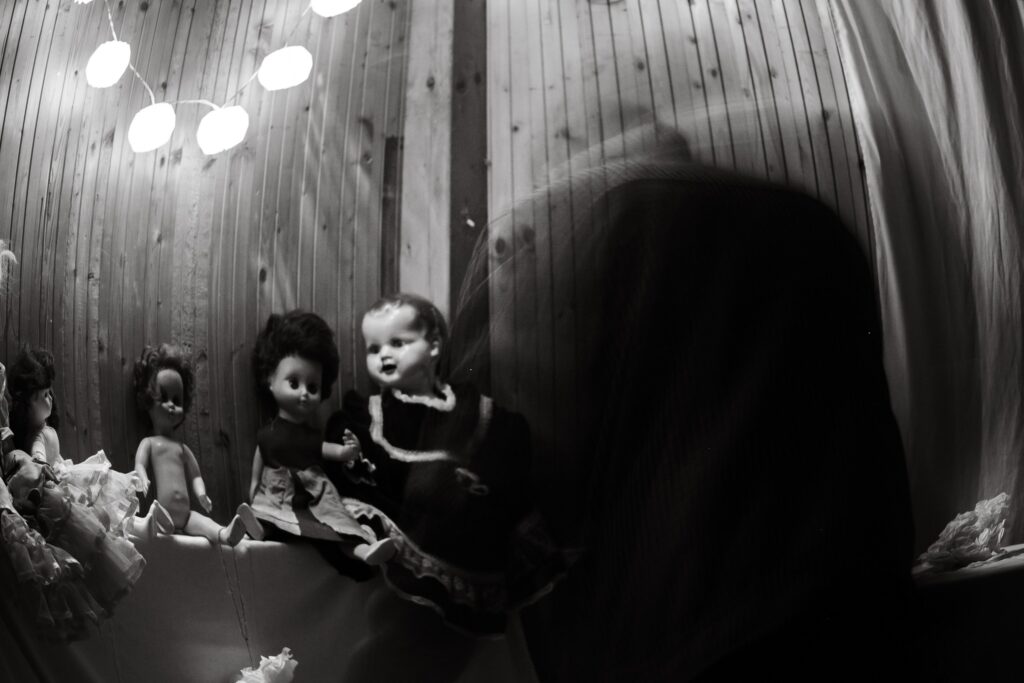
She ran through the house, desperately searching for somewhere to hide from him. Screams, blows, and agonized groans echoed all around her. She knew he was close. She glanced back—and didn’t see the pool of blood ahead. She slipped and crashed to the ground. Her brother’s lifeless body lay beside her. Footsteps approached behind her. Fast, too fast. She tried to get up, but slipped again. He was already looming over her, a poker in his hands and a cruel smile on his face. She frantically searched for anything she could use to defend herself, but deep down she knew it was pointless. When the first blow landed, she knew she had lost this race for her life. It was her fault. She deserved it. She was still breathing when he let the poker fall and stepped over her dying body. It happened again.
Once upon a time, there was a family…
House in Circles is a small, contained horror larp that we, a two-member organizing team (Lucka and Kla), first launched as a beta test in the fall of 2022. Six more runs followed between 2023 and 2025. The game is designed for 16 players and takes place in a cottage near Bělice, not far from Humpolec.
We love horror films and wanted to bring our favorite horror genres into larp. We were inspired by films and series such as The Haunting of Hill House, The Haunting of Bly Manor, and The Others. From the very beginning, we knew we wanted to build the game around a haunted house and ghostly horror. For a while we considered setting the game in an Anglo-Saxon environment, but eventually decided to lean into local horror traditions instead. House in Circles takes place in a cursed house somewhere in the Sudetenland, allowing us to work with local historical themes and realities.
The story itself is quite simple. A family moves into an abandoned house where they hope to start a new life. But they bring their old problems with them, and family conflicts intensify. It soon becomes clear they are not alone in the house—and that one of them might be right when they claim the house is haunted. The ghosts and the cursed house gradually reveal themselves more and more. Everyone turns against everyone else, and eventually they discover there is no escape from this whirlwind of hatred and madness. A murderous rampage erupts—and no one can get out.
Do you feel like we’ve just spoiled the entire story? Don’t worry. This basic structure is known to all players from the very beginning, and yet the game still hides many secrets that are revealed only gradually. Players still need to discover who the ghosts are, what caused the curse, and why murderous madness finally breaks loose at the end.
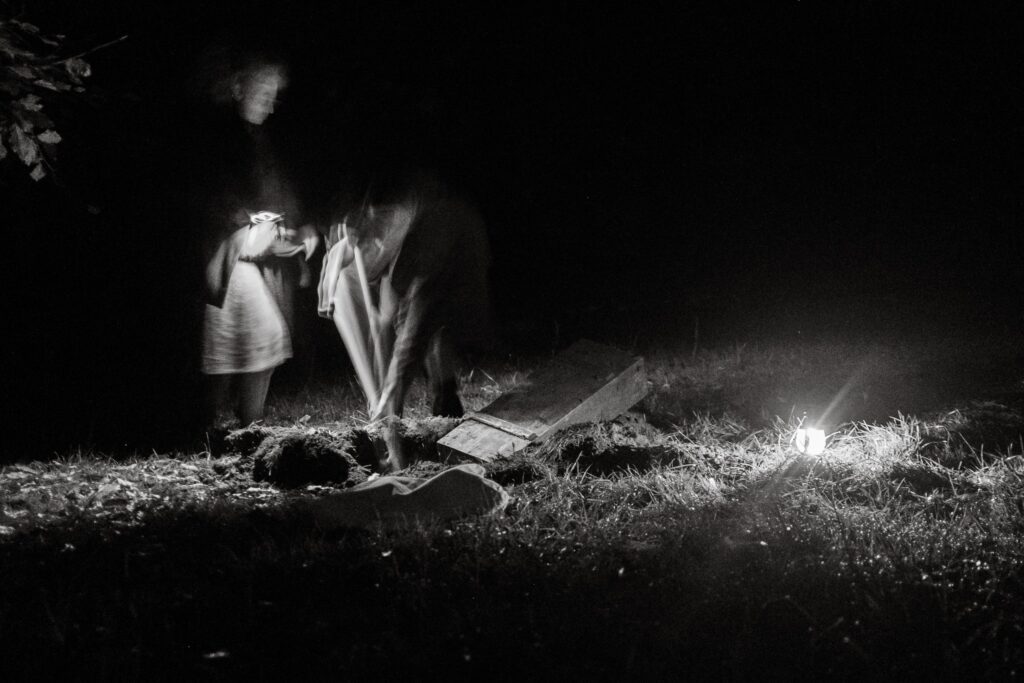
Horror Without Fear
Fear is the fundamental building block of horror. In films, creators rely mainly on fear of the unknown—flickering shadows in the darkness, strange sounds echoing in a quiet house, music that enhances everything. As soon as the evil fully appears, it often stops being scary. This is hard to transfer into larp. It’s like nighttime activities at a children’s camp: it takes a huge amount of work, yet a third of the people aren’t scared at all, a third are so terrified they won’t even take part, and only a third really enjoy it. That’s a lot of effort for little payoff—and we wanted to create a game that wasn’t production-intensive. So what to do?
We simply decided to give up on trying to make the players feel fear. We didn’t want to scare the players—we wanted the players to play being scared. And it’s difficult to be afraid of ghosts when you know perfectly well they’re your teammates, the same people you spent the previous evening with. There are a few spooky scenes in the game, and sometimes players find themselves alone in the dark and may genuinely feel afraid, but the game is not built on fear.Instead, the foundation of our horror became anxiety—a sense of wrongness and unease. Anxiety from broken family relationships. Anxiety from old wounds that can no longer be healed. Anxiety from an inevitable dark fate that cannot be stopped. We built the game around three genres: family drama, ghost horror, and a final slasher (killer-movie) climax. These layers follow and intertwine with each other in a way that builds and deepens that sense of dread. And larp, as a medium, can work with emotional distress even better than fear.
Artifacts and Distress
A key tool for building this distress was blurring reality and time. At the beginning, everyone has a clear idea of where and when they are, why they’re there, and who they and the people around them are. Gradually, it becomes clear that not everything is as it first seemed. Reality shifts and old memories rise to the surface. But are they truly the characters’ memories—or the house’s?
At the start, each character has a key object (an artifact) and a place that is important to them for reasons that aren’t fully clear. The artifact and place define the character and their past in some way, even if it’s not obvious at first glance. Someone has a key that fits nowhere. Someone else has a favorite vase they brought from their previous home.
But gradually, the artifacts change, and letters or diary entries appear in the characters’ places—reshaping how they see others and themselves. What was true at the beginning stops being true. The house never lies, even if it sometimes speaks in haze and fragments, and what it reveals is always the truth—truth the characters slowly come to accept. New memories create new conflicts, pushing the story toward its inevitable end.
We learned an important lesson from horror films: music creates a large part of horror. It wasn’t realistic for us to constantly build tension with music—and it wasn’t our goal either. Míša Hrabáková composed a soundtrack for us that plays during the final chapters of the game. Music also appears in individual horror scenes prepared for certain characters. Its elements were chosen to evoke distress and hint at forgotten memories.
The Others
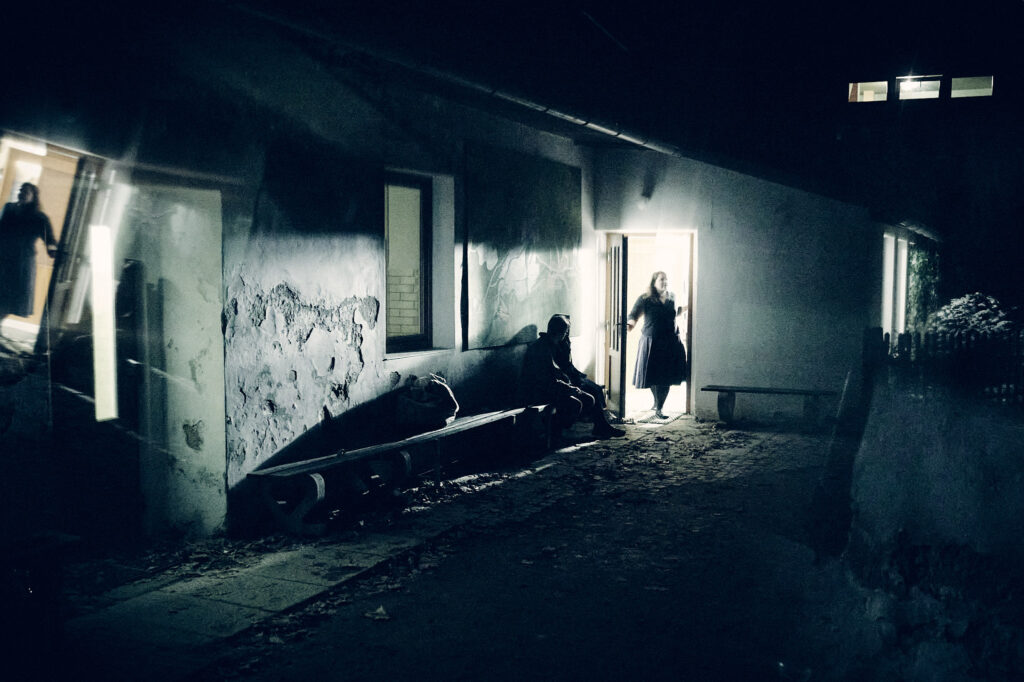
A ghost horror must, of course, have ghosts. From the beginning, we knew we wanted to base the game primarily on interaction between players rather than between players and the environment. Players are divided into two groups, each occupying one part of the house, and at first, with only a few exceptions, they do not meet. After a few hours, the two parts of the house start to connect, and players finally encounter one another.
We wanted to work with the idea that “the others” are not always visible—that ghosts only appear occasionally and only to some. So we introduced a color-symbol mechanic. From the second chapter onward, players could only see others who shared their color symbol. This prevented everyone from meeting at once and exchanging all information immediately after the groups merged. Instead, meetings happened gradually, and each pair experienced a slightly different dynamic in their first encounter. How open a character was to the idea that the house was haunted—and that someone else lived there—shaped these meetings. Gradually, everyone accepted this reality (as instructed from the start) and formed a relationship with “their Other,” which turned out to be far more important than it first appeared.
Even when characters cannot be seen, their presence can still be felt: footsteps, a breeze, overheard fragments of speech. It is up to the players how they incorporate these ghostly elements into their play.
From the start, there are also NPC characters played by the organizing team: local residents who help the family prepare the house before they fully move in. These characters help create an oppressive, sometimes bizarre atmosphere. They have their own important place in the story and their own past connected to the house. Over time, they shift from passive observers to active participants in both player groups. Ideally, there are seven of these characters, but the game can function even if someone drops from the organizing team—the beta test proved it works with fewer as well.
Will It Happen Again?
During the beta test, we confirmed that the core concept of the game really works. The changes we made afterward were mostly symbolic—mainly adding some new documents to better support character motivations that hadn’t been entirely clear. One classic problem that we haven’t been able to solve in a fully satisfying and permanent way is how to make it easier for players to accept a shift in how they see themselves—from a “good” character to a morally darker one. For characters who are morally questionable from the very beginning, it’s usually quite easy: players are already prepared for the fact that their characters have stains on their pasts, so they deal with new revelations more readily. For players who (not always justifiably) perceive their characters as positive, it’s more complicated, and sometimes all the in-game evidence still isn’t enough to convince them otherwise. Even so, we leave characters the freedom to treat their story in their own way.
The location itself also brings certain limitations. Ideally, a horror larp would take place in a large old farmhouse full of historical furniture—and after all its reconstructions and improvements, the Cottage in Bělice is no longer quite that. However, it meets other important needs. It is secluded, has a large garden and a barn, and most importantly, it allows us to create two separate play spaces for two game groups. Every participant gets their own bed, there is hot water and a well-equipped kitchen. For our purposes, the benefits of the place clearly outweigh its drawbacks (at least until a large, affordable, historically furnished farmhouse in the middle of nowhere magically appears).
The game has found its audience, and we have handed the materials over to a new organizing team so that we can free our hands for new projects. So—yes, it will probably happen again.
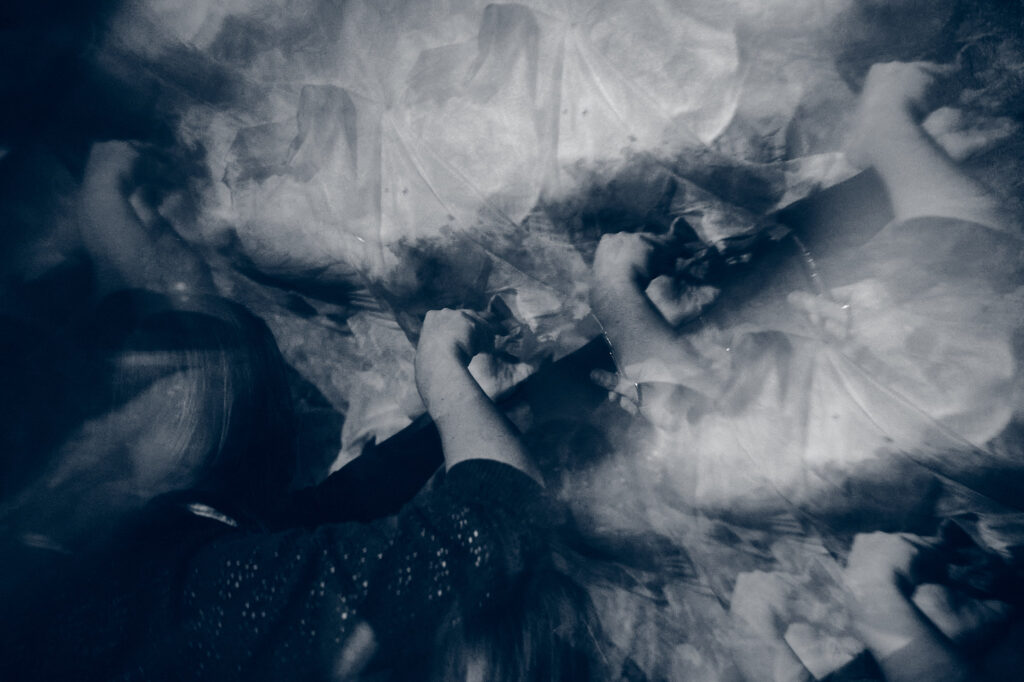
House in Circles
Players: 16 (9 women, 7 men)
Length od the game: 8 hours
Place: Cottage Na Bělici, Kaliště near Humpolec
Authors: Lucie Chlumská, Klára Kla Wanková
Web: https://dumvkruzich.rolling.cz/
Autor
Darien – Kristýna Obrdlíková 
Působí v Pardubicích, organizuje od roku 2007, tvoří převážně outdoory a v tomto kontextu se věnuje i focení a vzdělávání. Je součástí týmu Larpového newsletteru. Svůj čas tráví hledáním rozmanitých druhů inspirace a snahou o obohacení světa druhých.